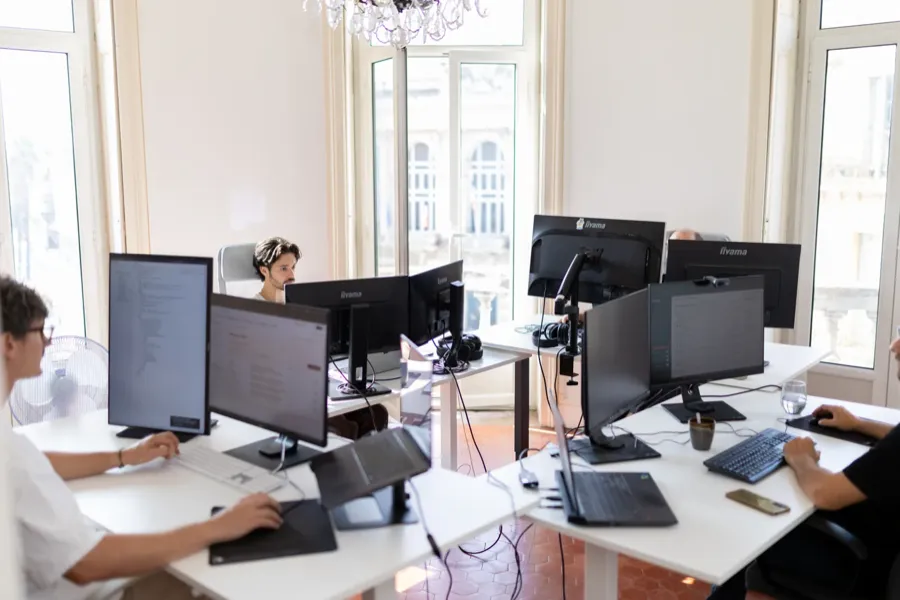
Spot the friction
Analyse your procedures with the teams who apply them, from everyday cases to exceptions.
Our method
With design-driven development, we first design and validate the right tool as a prototype with your teams, before a single line of code is written. Then we build it in visible stages. You keep control of the decisions. We bring the method and the expertise.
The principle
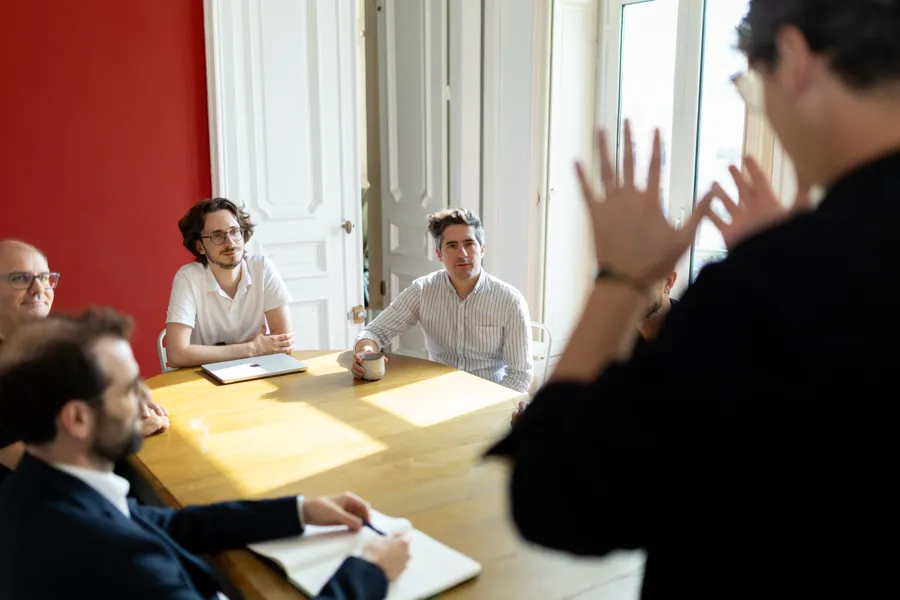
We listen to your business, propose solutions, put them to the test and decide with you.
Starting point
You come with your ways of working, often manual or poorly tooled. Workshops bring decision-makers, business teams and future users together to analyse them on real cases and turn them into a product.
Analyse your procedures with the teams who apply them, from everyday cases to exceptions.
We draw on our knowledge of IP firms to flag dead ends and propose solutions, discussed in the session.
Test journeys and screens on a prototype. Every decision is recorded and sourced.
Phase 01 · Design together
An agenda before, minutes after, mockups updated for the next session.
The process as it is practised today, drawn in the session with the teams: who does what, when, with which tool. The first mockups are shown from this session on.
DeliverableMap of the current process, pain points, open questions
Real cases, exceptions, expectations. Everything is written down, then sorted between what goes into the first version and what comes later.
DeliverableFunctional dossier and V1 scope
A prototype that behaves like the application, used in the session every week. Exchanges with the IPMS are settled as the sessions go.
DeliverableValidated prototype, data exchanges described
Every decision is gathered into rules. Each one points back to the session and the minute it was taken. The teams review the document before development.
Phase 02 · Build and deliver
Priority journeys and rules reviewed with users.
Short increments, regular demos, useful feedback.
Scenarios prepared with your teams, traceable issues and criteria.
Cutover, data migration, training and follow-up, then support and evolutions.